
"from crop to cup"
4000 article(s) found

From a coffee bean to a cup of coffee From Crop To Cup
What's coffee? First of all, we think of a cup of strong aroma and black liquid, or a cappuccino with white foam, or a large cup of cold and refreshing iced coffee, these are all coffee, but this is not all coffee. If coffee is fully defined literally, coffee should be red coffee grown on a green shrub called coffee tree.

There is also a way to tell whether the coffee is delicious or not when brewing coffee.
The easiest way to make delicious coffee is to sigh the filter paper filter pawn.

Is Guatemalan coffee the best? Is there fair trade certification for Antigua coffee in Guatemala?
Professional coffee knowledge exchange more coffee bean information please follow Coffee Workshop (Wechat official account cafe_style) Guatemala, the cradle of top coffee in Guatemala with extended mountains and great microclimate changes, in recent years, driven by national efforts to promote the development of coffee industry, both quality and planting methods have been greatly improved and changed, becoming an international top coffee supplier.

Flavor characteristics, producing areas and cooking parameters of single bean in Colombian spring manor
The exchange of professional baristas please pay attention to the coffee workshop (Wechat official account cafe_style) Columbia Spring Manor single bean flavor characteristics, production areas and brewing parameters Arnulfo also trained his son to learn cup testing skills in Los Naranjos's cup testing laboratory, laying the foundation for his career. For the new generation of coffee farmers, it is hoped that miniature batches that can be traced back to production information
More than half of the coffee shops in China do not make money from coffee.
A few days ago, a "profiteering door" news that the price of Starbucks coffee in the Chinese market is fully higher than that in the United States, causing widespread debate in the society. There are doubts that Starbucks' differential pricing is contrary to the principle of fairness, but there is also a view that calculating only the cost of raw materials while ignoring other operating costs obviously lacks economic common sense, coffee belongs to a non-monopoly industry, and its pricing power should be vested in the market and

Brazil breeds new coffee varieties Arara Flavor Features How and why coffee varieties matter?
The choice of variety affects coffee flavor, productivity, and desired growing conditions. Consumers are often excited to try varieties such as rose summer, while producers can remain faithful to well-served varieties. In Brazil, however, a new variety caught people's attention and won the quality contest-Arara. Cup scores extended into the mid-1990s, and with toughness

More than half of the coffee shops in China do not make money from coffee.
A few days ago, a piece of news that the price of Starbucks coffee in the Chinese market is fully more expensive than that of the United States, causing widespread debate in the society. There are doubts that Starbucks' differential pricing is contrary to the principle of fairness, but there is also a view that calculating only the cost of raw materials while ignoring other operating costs obviously lacks economic common sense. Coffee belongs to a non-monopoly industry, and its pricing power should be vested in the market and enterprises.

Kenya Coffee Flavor and Taste introduction to the varieties of African and Kenyan coffee beans
In less than a century, Kenya has become home to no less than four new varieties. First, the Scott Lab (ScottLaboratories) identified the famous SL-28 and SL-34 of the 1930s. They combine amazing flavor and drought resistance.
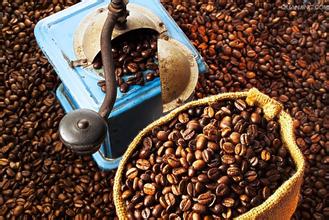
Coffee Quality: Factors Affecting the Taste of a Cup of Coffee-From Crop To Cup
As we have seen earlier, among the factors that affect the taste of a cup of coffee: green beans account for 60%, roasting accounts for 30%, and extraction accounts for 10%. So let's take a look at the whole process of coffee life, from a seed to a cup of coffee, and understand the factors of each factor on coffee taste one by one. Raw beans: good ingredients make good taste. This is the unchanging truth in the food industry. Quality of coffee beans

The vicious circle of climate change, the decline of bees and the decline of coffee production
Professional baristas Please pay attention to Coffee Workshop (Wechat official account cafe_style) Global warming has affected the growth of many crops, affecting coffee, not only reducing yields, drastic changes in flavor and aroma, but also aggravating crop diseases and insect pests. But what we may not have thought is that bees, one of the most important pollinating insects in nature, are also deeply affected by climate change.
Coffee goes through all over the world
From the 17th century to the early 18th century, the habit of drinking coffee spread from Europe, from the west to the whole of Europe, and eastward to India and present-day Indonesia. As for coffee as a growing crop, the Islamists brought the seeds from Yemen to India, and then Europe introduced the seeds to Ceylon and Java. Bring seeds from Java to Amsterdam

Where did the coffee come from? The origin of coffee is explained by isotopes. The origin and history of coffee
Professional coffee knowledge exchange more coffee bean information Please follow the coffee workshop (Wechat official account cafe_style) drink a cup of coffee to wake up the day, is undoubtedly a portrayal of the lives of many modern civilized people. You may not know that people have been drinking coffee for more than ten centuries. Due to the age, the origin of coffee can no longer be examined, and there is a lack of related historical events.

Panama coffee, Panama coffee
There are many stories about the origin of coffee. One is given by American scholar Anthony Wilty in Coffee: A History of Black: In 1414, Zheng He's fleet loaded with treasures arrived at Aden Port. A young Sufi religious leader, Gamaldine, boarded Commander Hung Pao's flagship and tasted the magic drink prepared by the Chinese with magical leaves. In Ethiopia, cover

Yemeni Matali small farm mocha coffee beans introduce the most common mocha coffee
Professional barista communication please follow the coffee workshop (Wechat official account cafe_style) Yemen Mokamatali Yemen is the first country to use coffee as a cash crop, legend has it that Muslim Sufi pilgrims were introduced from Ethiopia in the 6th century, the most correct spelling should be Al-Mahka, which is spelled in Arabic, growing in steep terrain with little rainfall, poor land and insufficient sunshine.

How to choose and buy good coffee beans?
How to judge the quality of beans from their appearance? From its color-whether glossy, uniform color without spots; smell its fragrance-whether fragrance is rich; oral brittleness-- put into the mouth to bite, whether crisp sound, good taste, and finally to see if the bean shape is full and has weight.

How to blend coffee beans from multiple origins into a unique Italian coffee
Since it is a blend, it naturally refers to more than two kinds of original beans, but a special example is that the same coffee beans with different roasting degrees can be blended together, and even the new crop of the same coffee beans can be blended with aged coffee or old crop. Therefore, the type referred to in the blend is no longer a narrow coffee variety, but a broad extension to coffee.

Yunnan coffee is a beverage crop with high economic value.
The western and southern parts of Yunnan Province are located between 15 N and the Tropic of Cancer, most of which are 1000-2000 meters above sea level. The topography is dominated by mountains and slopes, with large ups and downs, fertile soil, sufficient sunshine, rich rainfall and large temperature difference between day and night. These unique natural conditions form the special taste of Yunnan small-grain coffee, which is strong but not bitter, fragrant but not strong, slightly fruity. As early as fifty years

Changes in Ethiopian coffee producing areas how much Ethiopian coffee beans cost half a pound
Professional coffee knowledge exchange more information about coffee beans Please follow the coffee workshop (Wechat official account cafe_style) now a lot of the coffee we drink is made from Arabica coffee beans. Ethiopia is not only an important producing area of Arabica coffee beans, but also the largest producer of Arabica coffee beans in Africa. 15 million people live on it, so it is an important economic branch.

Introduction of Puerto Rican coffee beans with mild, supple and balanced taste
Puerto Rico's new farm coffee is a mild, supple and well-balanced island bean with a charming single malt flavor, extremely sweet when sipped in a cup, and medium-roasted creamy and greasy texture that is often suitable for Puerto Rico island beans. "Puerto Rican Coffee beans | Coffee beans w.kaf.name (Puerto Rico Coffee beans) from San Pedro Manor, Puerto Rico."

In a world that consumes 1.5 billion cups of coffee a day, half of the arable land for coffee production will disappear by 2050.
Half the coffee belt will disappear? The most popular beverage crop in the world can not grow everywhere. On the contrary, the growing area of coffee trees is very limited. Climate is the decisive factor in coffee cultivation, and coffee trees are only suitable for growing in the tropics or subtropics. The zone between latitude 25 degrees north and south is the most suitable for growing coffee. And this coffee production zone is generally called coffee belt or coffee.